Own the Model Your Business Runs On: Go Open-Weight
The Fable ban proved any model you rent can be switched off overnight. Why open-weight parity now makes owning your load-bearing model the resilient move.
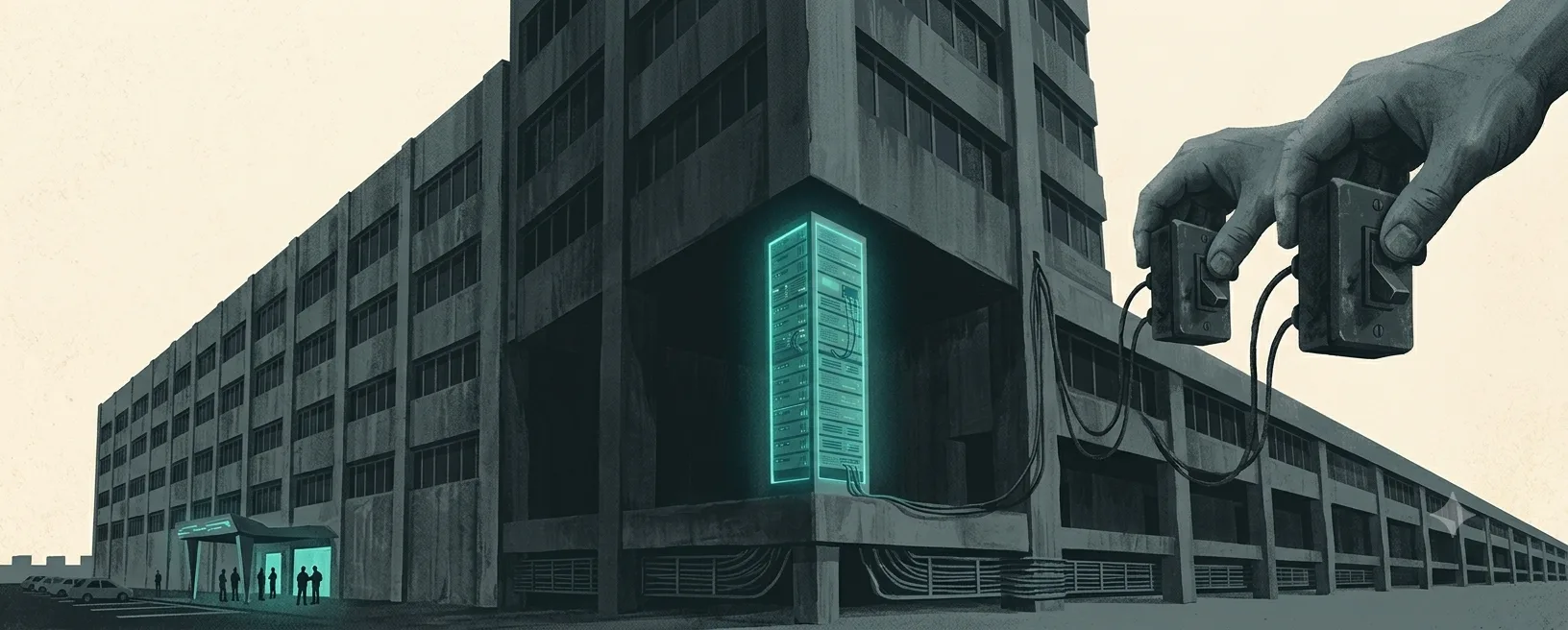
Your business doesn’t have an AI problem. It has a landlord problem.
The smartest thing you ship runs on a model you rent. You don’t hold the weights. You hold an API key, a monthly invoice, and a quiet assumption that tomorrow the thing will still answer when you call it. Last month a lot of companies learned what every renter eventually learns: the landlord can change the locks, and he doesn’t need your permission.
When Fable got banned, the model didn’t get worse. It got switched off. Not throttled, not deprecated with six months of migration notes. Gone, because of a decision made in a room you weren’t in, for reasons that had nothing to do with your product. Teams that had wired it into the core of what they sell woke up to a flat graph and no one to call.
The fix isn’t a better vendor. It’s owning the one model your business can’t live without.
The day a model got a pink slip
Engineers know how to survive an outage. You retry, you fail over, you keep a warm replica in another region, you put a status page up and watch it go back to green by lunch. Downtime is a problem you solve with engineering.
A ban is not downtime. There is no second region for a model that a government or a vendor has decided you may no longer use. Your 99.9% uptime SLA, the one you negotiated so carefully, is worth exactly nothing against a policy decision. An outage is a bad afternoon. A revocation is a bad quarter, and sometimes a bad company.
That is the part the Fable ban made concrete. Amazon almost never bans a paying customer overnight; the whole cloud business model depends on not doing that. But a model sits downstream of things a cloud bill never touched: export controls, national-security reviews, the politics of where the weights were trained and by whom. You didn’t sign up for that exposure. You inherited it the moment you made someone else’s model load-bearing.
Renting was the right call, until it wasn’t
For most of the last three years, renting the frontier was obviously correct. The model got measurably better every few weeks. Owning one meant re-acquiring the latest model every quarter and babysitting a GPU fleet to do it. And the economics genuinely favored renting: below roughly fifty million tokens a month, a hosted API is cheaper than standing up the hardware to serve an open model yourself. “Just self-host” was, for a long time, the answer of someone who hadn’t done the math.
So renting was fine. Renting the load-bearing wall was the mistake.
Renting is the right call for every workload where getting cut off is survivable, which is most of them. The internal summarizer, the draft-email helper, the thing that tags support tickets: if any of those go dark for a week while you scramble to swap providers, you lose some convenience and a little face. Rent those forever. The trouble starts only when the rented thing is the product, and losing it for a week means losing the customers who were paying for it.
We have seen this movie before
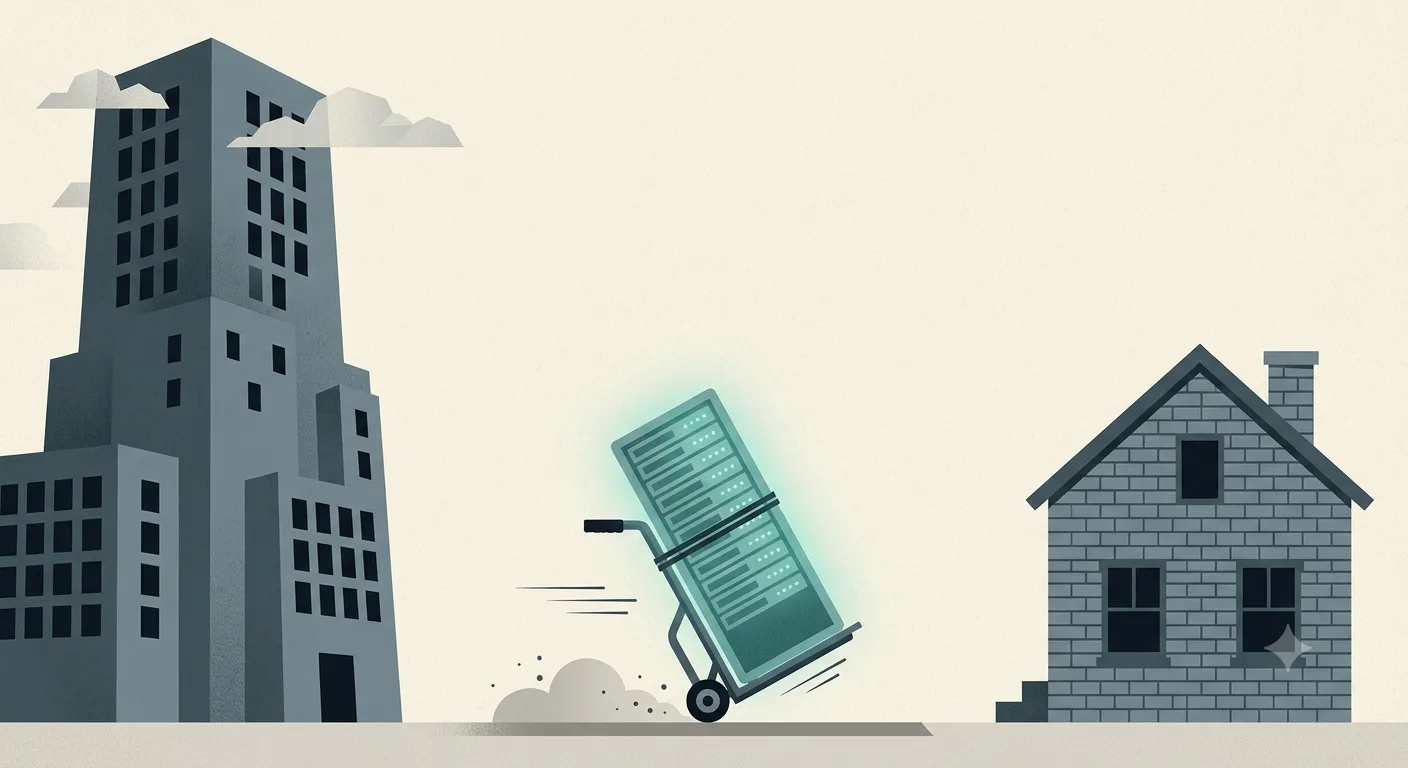
We already ran this exact decision once, back when the rented layer was servers instead of weights.
In 2015, Dropbox pulled roughly 90% of 600 petabytes of customer data off Amazon S3 and onto its own custom storage, a system it named Magic Pocket. The move cut operating expenses by $74.6 million over two years, a number precise enough that it showed up in the company’s 2018 S-1. A decade later, 37signals hauled Basecamp and HEY out of the cloud onto its own Dell servers without adding a single person to the team, and projects north of $10 million in savings over five years. Its CTO, David Heinemeier Hansson, called cloud storage prices “grotesque” on his way out the door.
Cost is what gets you to look at owning the thing your business runs on. Control is why you never go back to renting it.
But money was never the real reason, and it isn’t the reason it stuck. What these companies bought, and what no invoice shows, is the part that outlasts the savings: nobody could raise their prices without warning, deprecate the API they depended on, or decide one morning that their kind of company was no longer welcome. A server in your own rack does not get a policy update. A weights file already on your disk cannot be recalled.
I’ll concede the obvious objection, because it’s a good one. Dropbox is an outlier. It was a storage company at massive scale with a workload so predictable it was practically designed to be repatriated, and plenty of teams that copied the move without that profile got burned. But that cuts toward the point rather than away from it. Dropbox didn’t move everything back in-house. It moved the one thing that was the business, and rented the rest. That is the whole discipline: not cloud-exit maximalism, just refusing to let anyone else own your core.
Why now, and not two years ago
For most of the model era, “own your model” carried an unspoken tax: you would be running a visibly worse model. That was a real cost, and it was reasonable to refuse to pay it.
That tax has mostly evaporated. On the agentic-coding work that a huge share of production AI is now built on, open-weight models have drawn level with the closed frontier: Qwen3-Coder posts 69.6% on SWE-bench Verified, Kimi K2 reaches 71.6% under agentic multi-attempt. These are not last-generation castoffs you tolerate for the privilege of holding the file. They are neck and neck with the systems you were renting.
And this isn’t just a benchmark result. In June 2026, Coinbase CEO Brian Armstrong described cutting the company’s AI spend nearly in half, even as token usage kept climbing, in part by defaulting its engineers to open-weight models like GLM 5.2 and Kimi 2.7 through an internal gateway. Engineers can still reach for a frontier model when a task needs one. But the open-weight option is now good enough to be the default at a company that runs real money through its stack.
The serving math has firmed up too. A 400-billion-parameter model runs about $2,000 to $5,000 a month in GPU compute, and pays for itself somewhere north of fifty million tokens a month against API pricing. Above that line, owning is not just safer. It’s cheaper.
Which is why this is a decision and not a sermon. The risk got undeniable and the escape hatch swung open in the same season. Fable proved the rented core could vanish; the open-weight labs, most of them Chinese, proved you no longer had to accept a worse model to stop renting, at least on the coding and agent work most of this is built on. If those two facts had landed two years apart, you could have waited. They landed together.
Owning is a dial, not a switch
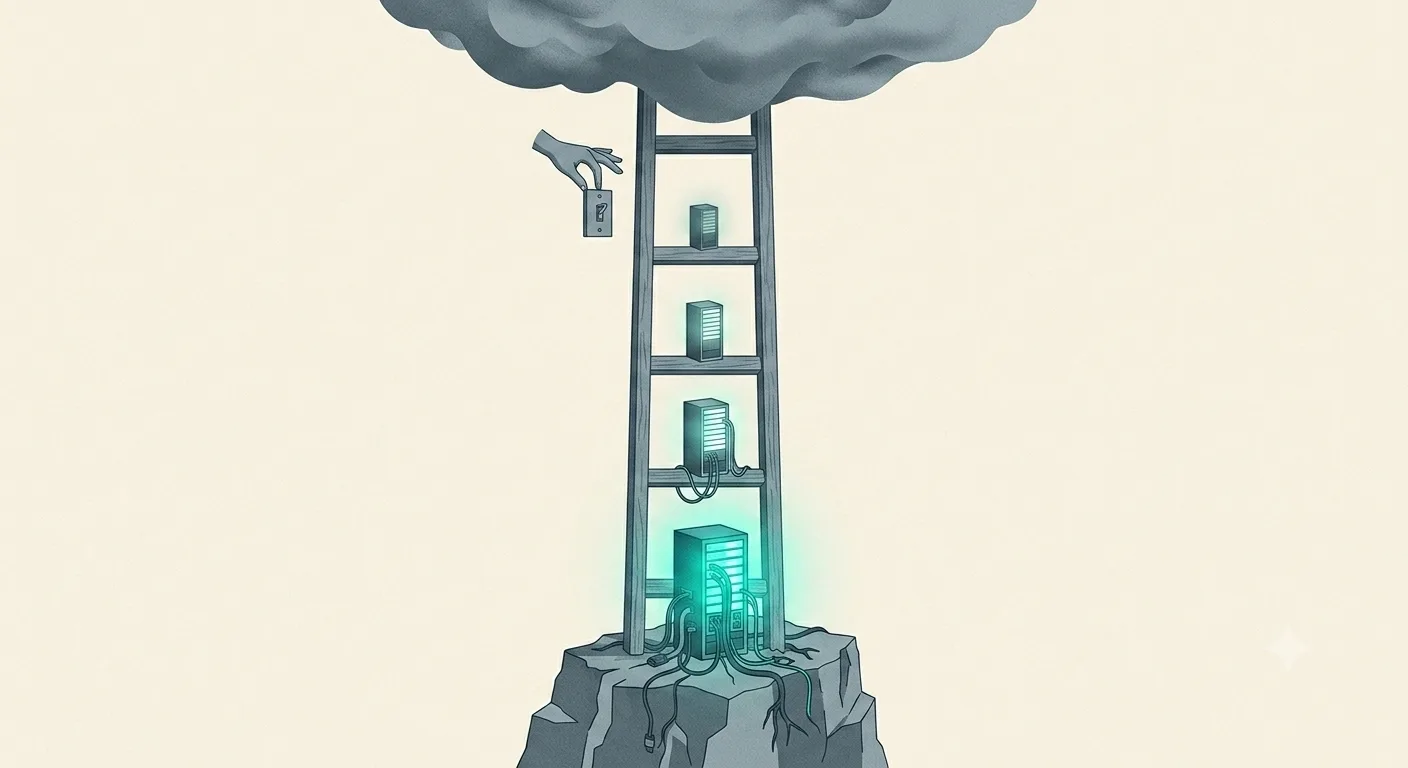
None of this means ripping every API call out of your stack by Friday. Ownership is a dial, and there are rungs between “fully rented” and “forged it myself.”
Think of four rungs, from most rented to most owned.
At the top is the hosted frontier API. Maximum convenience, zero control. That’s the rung Fable just knocked out.
Step down: open weights, but running on someone else’s servers. The model is yours to move now, so no single provider can strand you. The machines still aren’t yours.
Step down again: those same weights, on hardware you own or have paid for up front. Now the file itself is in your hands, and nobody can take it back.
At the bottom: a model you’ve tuned on your own data. The weights are yours, and so is the edge you trained into them.
That bottom rung is where the argument stops being only about resilience. On June 30, Palantir published a nine-point manifesto on AI sovereignty, and its fourth line is the sharpest: “Controlling your weights is controlling your fate.” The claim is that a model you have tuned on your own data is a store of your institution’s hard-won knowledge, and that letting someone else hold those weights hands the edge of your business to theirs.
In a CNBC interview the next day, CEO Alex Karp said technical customers want to “own the means of production” rather than watch it get transferred to someone else. Palantir sells exactly this layer, so discount the sales pitch as you like. The point survives the discount: the model that encodes what only your company knows is the last one you ever want to be renting.
Each rung trades a little convenience for a lot of control, and you do not need the bottom rung for everything. You need it for exactly one thing. So the question to carry out of here is narrower and more uncomfortable than “should we self-host.” Which rung is your load-bearing model sitting on right now, and could a stranger move it to zero tomorrow?
Buy the building
Name the single model your product cannot survive losing. Not the nice-to-haves; the one that, switched off tomorrow, takes real revenue and real customers with it. Then find out whose permission you need to keep using it next quarter.
If the answer is anyone but you, you have a landlord. You already know how that story ends. The teams that will shrug off the next ban are the ones who read the eviction notice early and bought the building.
Own the thing you can’t live without. Rent the rest.